• Features
    • Background
    • GST/HST & QST Parameters
    • Android/IOS App
    • Bank Card Transactions
    • Simulation
    • Productivity
    • Accounting & Management
    • Rectifying an Expense Report
    • Exact Method Versus Factors Method
    • OCR
    • Distance Calculator
    • Kilometer Log
    • Kilometer Allowance
    • Audit Trail
    • NPO
    • Accounting Integration
  • Pricing
  • Resources
    • Request a Demo
    • Join a Live Demo
    • Request Questionnaire
    • Award
    • New Release
    • Blog
    • Contact Us

Language

  • English
  • Français
Login

Corporate Credit Cards & the Digital Transformation – Several Steps to Follow

March 12, 2026 by Serge Vanier, CPA Leave a Comment

To successfully execute the digital transformation of the corporate credit card process, there are seven key tasks that must be addressed.

1) Tax Rules: Monthly Credit Card Statements Are Not Valid Supporting Documents

When designing the process, it is important to consider the tax rule that a credit card statement (i.e., VISA, Mastercard, or American Express) is not considered a valid supporting document for either income tax or sales tax purposes. Each individual invoice associated with the transactions appearing on the credit card statement is the proper document that must be retained for tax purposes.
For example, Section 65 of the GST/HST Memorandum 8.4, entitled “Documentary Requirements for Claiming Input Tax Credits”, states:

“A registrant should be aware that a monthly credit-card statement does not constitute sufficient documentary evidence to claim an ITC. Whether the registrant uses the factor approach to calculate the ITC or the actual tax paid or payable method, the credit-card statement must be supported by another document (e.g., a credit card receipt, an invoice) to entitle the registrant to claim an ITC.”

2) Sales Tax: The Cost of Non-Compliance on Corporate Credit Card Expenses

From a sales tax perspective, the financial impact of non-compliance can be significant.
For example, if your organization incurs $1 million in annual credit card expenses, and the average recoverable sales tax is 10%, failing to retain the supporting invoices for those expenses could result in an annual loss of $100,000, before penalties and interest.
Assuming a four-year tax audit period, an assessment could easily exceed $500,000.
In the Canadian tax environment, it is therefore essential to implement a system that allows employees to easily attach the appropriate invoice to each credit card expense.

3) Monthly Credit Card Statements in an Electronic Format

The administrator of an Advataxes account can upload a single electronic file containing all corporate credit card transactions for all employees. There is no need to change credit card issuers, provided that the required information is included in the file.
Each transaction record includes key information such as:
• The transaction date
• The supplier name
• The transaction amount
This provides an excellent starting point for the tax compliance process, but it is only the beginning.
Each employee will automatically receive a notification that their monthly credit card statement has been uploaded to their account.

4) Attaching Receipts to Each Transaction Using a Smartphone or Desktop

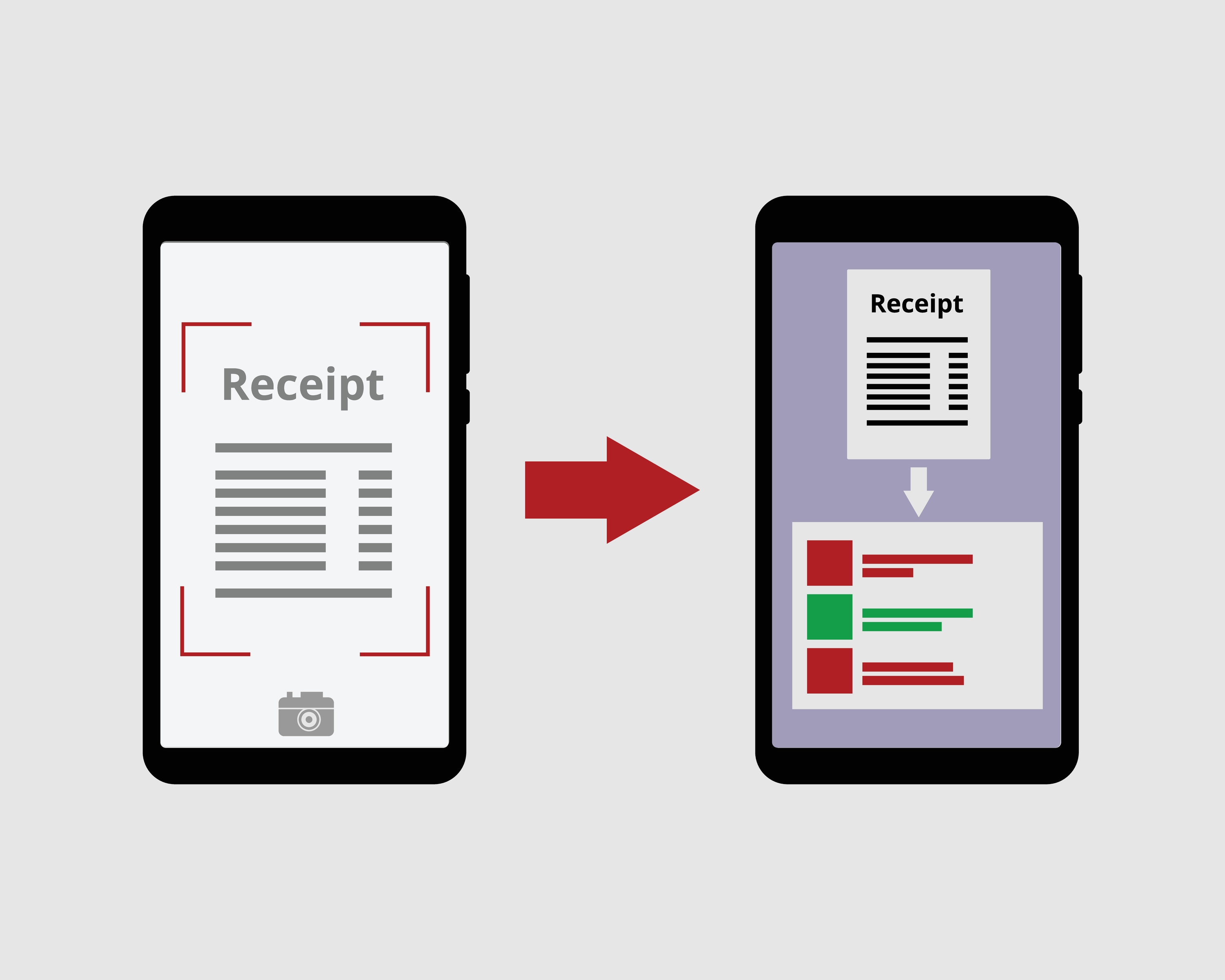
Employees can use their smartphone or desktop computer to attach a digital image of the corresponding receipt to each transaction appearing on their electronic credit card statement.
Each employee can access their Advataxes account through the iOS/Android mobile application or via the web platform.
These tools allow employees to quickly and efficiently attach a digital copy of the receipt to every credit card transaction, ensuring that proper supporting documentation is maintained.

5) The Sales Tax default Setting in the Employee’s Profile

Advataxes stores a default province in each employee’s profile, which automatically determines the applicable sales tax rules.
For example, an employee located in Ontario will have the 13% HST applied to their expenses, while an employee located in Quebec will have both GST and QST applied to their expenses.
If an expense is incurred outside the employee’s usual province, the employee or an approver can easily modify the applicable tax rule for that specific transaction

6) Tax configuration at the organization level

Advataxes also includes sales tax configuration settings at the organizational level.
For example, if your organization is a non-profit organization, the system can be configured to reflect situations where GST/HST and QST are only partially recoverable according to provincial rebate rules. Similarly, if certain expenses such as meals and entertainment allow only partial recovery of GST/HST or QST, these parameters can also be configured.
These settings are established during the initial account configuration, ensuring that sales tax calculations remain accurate and compliant with applicable tax rules.

7) Link to the GL

The last step is to ensure a link to the GL and to upload all corporate credit card transactions in an accounting software. For further details, see our page Accounting Integration.
Filed Under: Uncategorized Tagged With: Cartedecredit, Creditcardstatement, datedetransaction, exactmethod, GST, gst/hst, HST, itc, mastercard, montant, nomdufournisseur, OCR Expense Report, qst, suppliername, transactionamount, transactiondate, visa

Are your invoices in an electronic format stored outside Canada?

July 14, 2025 by Serge Vanier, CPA Leave a Comment

Canada Revenue Agency General Requirements for Record Keeping

The Canada Revenue Agency published last month a revised version of their guidelines regarding how books and records EDM9-1-1 entitled “General requirements for Records”, such as sales invoice, purchase invoice, and other accounting documents should be maintained by taxpayers.

Location of Accounting Records

The general rule is to the effect that a person must keep their books and records in Canada in either English or in French. Yet, a person may seek written authorization from the CRA to keep records outside of Canada as explained in section 10 of that guide;

“10. To seek written authorization from the CRA to keep records outside Canada, a person or their authorized representative must make a written request to their regional excise office and provide the following information:

• a clear identification of the records requested to be kept outside of Canada, including the format of those records
• the complete address of the location where the records are requested to be kept
• a signed undertaking by the person making the request that they will be responsible for ensuring that any records kept outside Canada will be made available within 30 days for review or audit by the CRA upon request
• details of the circumstances that may justify keeping the records at a location outside Canada
• any other information considered pertinent to the request”

Electronic-Keeping Method and Imaging
The CRA supports the digital transformation of accounting documents. Here is an abstract of their rules:

“22. Persons that must keep records are responsible for keeping them in a manner that will ensure the reliability and readability of the information recorded.

23. All records and supporting source documents originally produced in paper format must be kept in that format, unless they are saved in an acceptable electronic format.

24. All records and supporting source documents originally produced in electronic format must be kept in an electronically readable format, even if printouts are available.

25. “Records are considered to be kept in an electronic format when information is entered directly into any device for electronic processing, manipulation, or storage on electronic or optical media.”

Comments

Advataxes ‘clients’ data is stored in datacenters located in Canada. Furthermore, clients can extract expense reports as well as all receipts attached to them in a readable PDF format (see our video here).

Filed Under: Uncategorized Tagged With: Creditcardstatement, exactmethod, Expensereport, GST, gst/hst, HST, Meal, OCR Expense Report, qst, SAAS

Revenu Quebec will strengthen its mission in terms of Audit

April 5, 2023 by Serge Vanier, CPA Leave a Comment

Within the tabling of the Quebec budget on March 22, 2023, the Quebec Government has notably announced the hiring of additional staff which will enable them to strengthen its mission in terms of audits. Budget 2023-2024 provides expenditures of $117 million over 5 years to ensure tax fairness.

One of the objectives is to “Step up its inspection activities in all sectors of activity, …” as stated in the budget documents. The Quebec government estimates that this measure will increase revenues by $200 million over 5 years. This plan also targets high-risk sectors.

Filed Under: Canadian Taxation Tagged With: employee expense software, GST, gst/hst, HST, OCR Expense Report, qst, SAAS

Optical Character Recognition (OCR)

May 31, 2022 by Serge Vanier, CPA Leave a Comment

After conducting a wide range of tests, we have selected an Optical Character Recognition (OCR) provider that complements Advataxes. Considering that our clients’ expenses are mostly incurred in Canada we have put our focus to ascertain receipts from organizations incurring notably travel expenses in Canada are by and large well deciphered.

Whether employees of our clients are using their smartphone to upload pictures of their receipts on our mobile app or they are using their laptop/desktop for notably uploading an electronic invoice that they would have received in an email or that they downloaded from the website of their suppliers, Advataxes can now shorten even further the processing time of filling out their expense report. Our clients can now benefit from this technology that uses artificial intelligence.

At the end of the day, our goal is for employees to get their business expenses reimbursed under their company policy, ensure they spend less time preparing their expense report, allow each organization to easily analyze spending, digitalize receipts, and ascertain that recoverable GST/HST and QST are both properly done and maximized. For more information and to view a demo, consult our OCR page on our website.

OCR

Filed Under: App, Uncategorized Tagged With: OCR Expense Report

LATEST BLOG POSTS

  • Corporate Credit Cards & the Digital Transformation – Several Steps to Follow
  • Are your invoices in an electronic format stored outside Canada?
  • Handle GST/HST/QST on Employee Expenses with Ease
  • GST/HST Holiday on Meals for 2 Months ?
  • Venture Summit – 2024 Toronto Collision Conference Edition 2024

About Advataxes

Advataxes is an online accounting software for employee expenses that automates recoverable GST/HST and QST for small, medium and large businesses. Employees can fill out and submit their expense reports to their supervisors from anywhere using their PC, tablet or smartphone in no time. This online software is available in English and French. Advataxes is a product of Ad Valorem which is a member of Antea an internationnal association of independent firms.

Try Advataxes Now
  • Contenu
    • Background
    • Parameters
    • Android/IOS
    • Bank Card Transactions
    • Simulation
    • Productivity
    • Accounting & Management
    • Rectifying an expense report
    • Exact Method versus Factors Method
    • OCR
    • Distance Calculator
    • Kilometer Log
    • Kilometer Allowance
    • Audit Trail
    • NPO
    • Accounting Integration
  • Ressources
    • Request a Demo
    • Join a Live Demo
    • Request Questionnaire
    • Pricing
    • Log In
    • Requirements
    • Blog
    • News Release
    • Award
    • Privacy Policy
    • Terms of Use
    • Contact Us
  • Social
    • Linkedin
    • YouTube
    • Twitter

© Copyright 2025. Ad Valorem Inc.

Advataxes is a registered trademark